 Acceler Learn
For decades, the “Job Description” has been the cornerstone of human resources. It defined who we hired, how we paid them, and what we expected them to do. But in an era of generative AI, market volatility, and a deepening global talent shortage, the static job description has become a liability. It is too rigid for a world that moves at the speed of light.
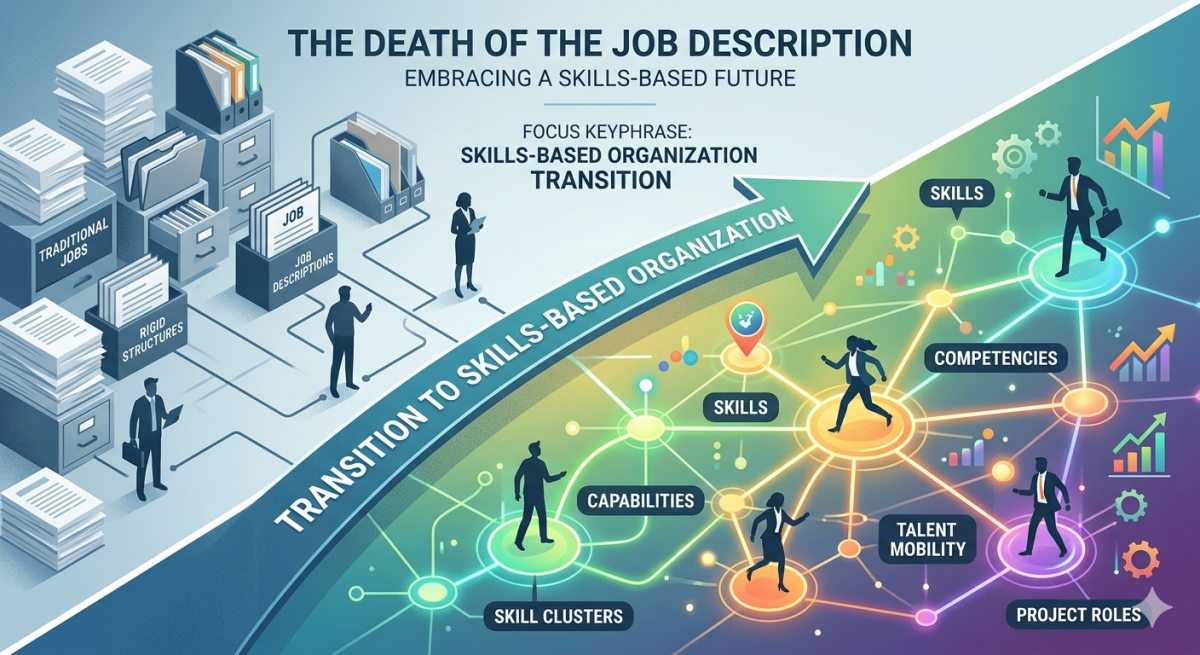
Forward-thinking CEOs are shifting their strategy. We are witnessing the rise of the Skills-Based Organization (SBO), a model where work is defined by the tasks to be done and the skills required to do them, rather than outdated titles and three-page PDFs.
The Data: Why the Traditional Model is Failing
The shift isn’t just a trend; it’s a response to a fundamental breakdown in the labor market:
- The Agility Gap: According to Deloitte, 63% of executives say their current job-based structures are the biggest barrier to agility. When work is siloed into rigid “jobs,” employees are less likely to help on projects outside their immediate scope, even if they have the skills to do so.
- The Half-Life of Skills: The average half-life of a learned skill is now only five years, and in technical fields, it’s closer to two. A job description written 18 months ago is likely already obsolete.
- Retention through Mobility: LinkedIn research shows that employees at companies with high internal mobility stay 60% longer. By focusing on skills rather than titles, organizations can move talent to where it is needed most, keeping employees engaged and preventing burnout.
What is a Skills-Based Organization?
In a traditional company, you hire a “Marketing Manager.” In a skills-based organization, you hire for a capability cluster: Data Analytics, Brand Storytelling, and SEO Strategy.
When a new project arises, say, a sudden need to pivot to a new social platform, the organization doesn’t look for a “Social Media Manager.” Instead, it queries its Skills Intelligence platform to find anyone across the company with high proficiency in Short-form Video Production and Community Management.
The result? You deploy the right talent to the right problem in hours, not months.
The Strategic Benefits of the Shift
- Solving the Talent Shortage
When you hire for a “Job,” you look for the “Perfect Candidate”, someone who has done that exact role for 5 years. This person rarely exists in today’s market. When you hire for “Skills,” you widen your talent pool. You might find a high-performing teacher who possesses the Communication, Presentation, and Curriculum Design skills needed for your Corporate L&D role.
- Enhancing Equity and Inclusion
Job descriptions often include “proxy requirements” like Ivy League degrees or specific years of experience that don’t actually correlate to performance. By focusing strictly on demonstrated skills, organizations reduce bias and tap into diverse talent pools that have been traditionally overlooked.
- Driving “Decision Velocity”
In an SBO, managers don’t wait for “Headcount Approval” to start a project. They look at the organization’s Skills Dashboard and “borrow” 10% of the time of three internal experts. This fluid allocation of labor allows companies to respond to market shifts instantly.
How to Start the Transition
Transitioning to an SBO doesn’t happen overnight. It requires a fundamental shift in leadership mindset:
- Deconstruct the Work: Stop asking “Who do we need to hire?” and start asking “What are the problems we need to solve?”
- Inventory Your Skills: Implement a Skills Intelligence Platform to map the existing capabilities of your current workforce.
- Reward Skill Acquisition: Change your compensation models. Instead of paying for a “Level 4 Manager” title, pay for the mastery of critical, high-demand skills that drive business value.
The Bottom Line
The job description was designed for the industrial age, an era of predictability and repetition. In 2026, the competitive advantage belongs to the “Fluid Enterprise.” By breaking the shackles of the job description, you don’t just find talent; you unleash it.
Move from Static Roles to Dynamic Results with AccelerLearn
The transition to a skills-based model can feel overwhelming, but you don’t have to build the roadmap alone. AccelerLearn specializes in helping organizations dismantle outdated job silos and build high-velocity talent ecosystems.
Whether you need to implement a Skills Intelligence Framework, upskill your leadership team for Human-Centered Management, or design an Internal Mobility Strategy, AccelerLearn provides the research-backed tools to get you there faster.
Ready to future-proof your workforce?
Contact AccelerLearn to schedule a strategy session and turn your organization’s hidden potential into a measurable competitive advantage.
Share on Social Media